Transmission Parts Explained: How Power Reaches the Wheels
The transmission system is one of the most important mechanical systems in a vehicle. While the engine generates power, the transmission ensures that this power is transferred efficiently to the wheels so the vehicle can move at different speeds.
Without a properly functioning transmission, the power produced by the engine would never reach the wheels. Understanding the key transmission parts and how they work together helps drivers maintain their vehicles and identify potential problems early.
What Is a Car Transmission System?
A transmission is a mechanical system that transfers engine power to the vehicle’s wheels while controlling speed and torque. It allows the engine to operate efficiently at different driving speeds.
Cars generally use one of the following transmission types:
- Manual transmission
- Automatic transmission
- Continuously Variable Transmission (CVT)
- Dual-clutch transmission (DCT)
Regardless of the type, the fundamental goal of every transmission system is the same: to deliver controlled power from the engine to the wheels.
Key Transmission Parts and Their Functions
1. Clutch
The clutch is a crucial component in manual transmission vehicles. It connects and disconnects the engine from the transmission.
Functions of the clutch
- Engages power from the engine to the gearbox
- Allows smooth gear shifting
- Prevents engine stalling during stops
When the driver presses the clutch pedal, it temporarily separates the engine from the transmission so gears can change smoothly.
2. Gearbox (Transmission Gear Set)
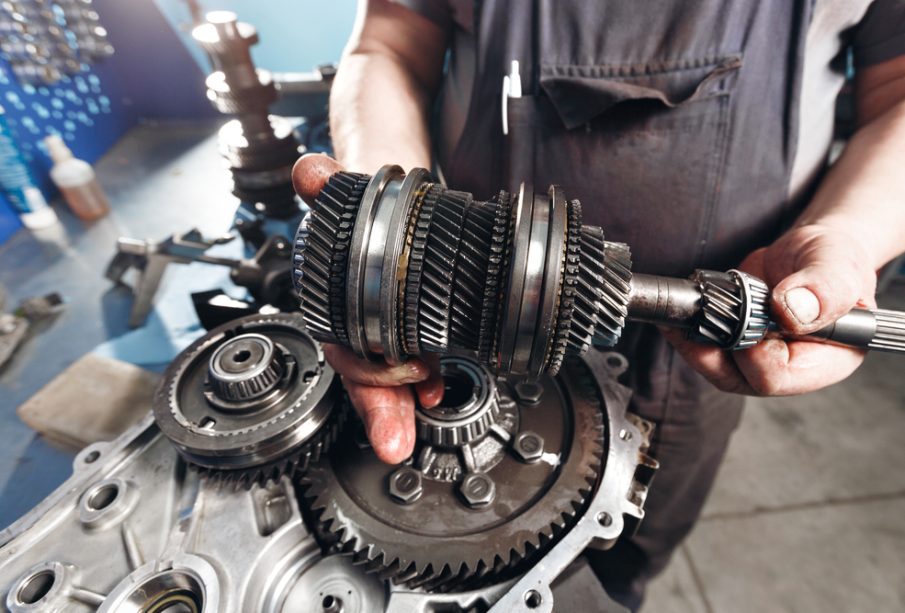
The gearbox contains multiple gears that adjust the speed and torque delivered to the wheels.
Functions of the gearbox
- Provides different gear ratios
- Allows the vehicle to accelerate efficiently
- Maintains engine performance at various speeds
Lower gears deliver more torque for acceleration, while higher gears enable fuel-efficient cruising speeds.
3. Torque Converter
In automatic transmissions, the torque converter replaces the clutch.
Functions of the torque converter
- Transfers engine power to the transmission
- Multiplies torque when needed
- Allows the engine to keep running while the vehicle is stopped
It uses hydraulic fluid to transfer rotational energy smoothly.
4. Transmission Shaft
Transmission shafts connect different internal components and carry rotational power through the gearbox.
Important shafts include:
- Input shaft – receives power from the engine
- Countershaft – transfers power between gears
- Output shaft – sends power to the driveshaft
These shafts allow power to flow smoothly through the transmission system.
5. Driveshaft
The driveshaft connects the transmission to the differential.
Functions of the driveshaft
- Transfers rotational energy from the transmission
- Delivers power to the vehicle’s axle
- Maintains balanced rotation at high speeds
Driveshafts are designed to withstand high torque and rotational stress.
6. Differential
The differential is a key component that distributes power to the wheels.
Functions of the differential
- Allows wheels to rotate at different speeds
- Transfers torque to the drive wheels
- Improves traction during turns
Without a differential, both wheels would rotate at the same speed, making turning difficult.
7. Axles
Axles connect the differential to the wheels and carry the power that ultimately moves the vehicle.
Functions of axles
- Transfer torque to the wheels
- Support vehicle weight
- Maintain wheel alignment
Axles must be extremely durable to handle constant load and rotational force.
How Power Moves from Engine to Wheels
The transmission system follows a step-by-step process to deliver power from the engine to the wheels.
Power Flow Process
- Engine produces rotational power through combustion.
- Clutch or torque converter connects the engine to the transmission.
- Gearbox adjusts speed and torque using gear ratios.
- Output shaft transfers power to the driveshaft.
- Driveshaft sends power to the differential.
- Differential distributes torque to the axles.
- Axles rotate the wheels, moving the vehicle forward.
This coordinated system allows vehicles to accelerate, climb hills, and maintain stable speeds.
Common Transmission Problems
Transmission components experience wear over time, which may cause performance issues.
Common transmission problems include:
- Slipping gears
- Delayed gear engagement
- Transmission fluid leaks
- Grinding noises
- Difficulty shifting gears
- Burning smell from transmission fluid
Ignoring these warning signs can lead to severe damage and expensive repairs.
Transmission Maintenance Tips
Regular maintenance keeps the transmission system working smoothly and extends its lifespan.
Important maintenance practices include:
- Check and replace transmission fluid regularly
- Avoid aggressive acceleration and sudden gear shifts
- Inspect clutch and gearbox components periodically
- Address leaks or unusual noises immediately
- Follow the manufacturer’s recommended service schedule
Proper care significantly reduces the risk of transmission failure.
Importance of the Transmission System
The transmission is essential for overall vehicle performance and efficiency.
Benefits of a well-maintained transmission
- Smooth acceleration
- Improved fuel efficiency
- Reduced engine strain
- Better driving control
- Longer vehicle lifespan
Because of its complexity, the transmission is considered one of the most sophisticated mechanical systems in a car.
Frequently Asked Questions (FAQs)
1. What is the main function of a car transmission?
The main function of a transmission is to transfer engine power to the wheels while adjusting speed and torque through different gear ratios.
2. What is the difference between manual and automatic transmission?
A manual transmission requires the driver to shift gears using a clutch pedal, while an automatic transmission changes gears automatically using hydraulic systems and sensors.
3. How often should transmission fluid be changed?
Most vehicles require transmission fluid replacement every 40,000 to 100,000 kilometers, depending on driving conditions and manufacturer recommendations.
4. What causes transmission slipping?
Transmission slipping can be caused by low fluid levels, worn gears, damaged clutch plates, or faulty sensors.
5. Can a vehicle run with a damaged transmission?
A damaged transmission can cause loss of power, poor acceleration, and unsafe driving conditions, so repairs should be performed immediately.
6. What are the signs of a failing clutch?
Signs include difficulty shifting gears, a burning smell, slipping gears, and reduced acceleration.
7. Why is the differential important in a vehicle?
The differential allows wheels to rotate at different speeds while turning, improving traction and preventing tire wear.